|
|

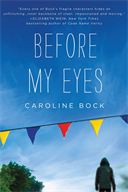
Caroline Bock-BEFORE MY EYES
|
Posted on Wednesday, December 31, 2014 10:39 AM
Best of 2014 and Looking Forward to 2015...
Best new place: Pittsburgh, one night visit included the
Carnegie Science Center and the Duquesne Incline. Looking forward to second
Pittsburgh trip in 2015.
Best New Thing About My Writing: Having BEFORE MY EYES
published in February by St. Martin’s Press… and returning to writing scripts
for television and film. Looking forward to diving into flash fiction, a new
novel and scriptwriting in 2015! Best favorite new bookstore: Politics and Prose in D.C.
(best 1-day class taken there with Leslie Pietrzyk)
Most unexpectedly best political movie of 2015 streamed on
Google Play: The Interview; going beyond the sophomoric bits of sex and drugs
and comic book action, this movie had a lot to say about the inherent evils of
dictatorial regimes (mass starvation, concentration camps) and how the media in
their countries and around the world props up the lies of these regimes.
Best new version of classic musical, which my nine- year old
daughter also loved: Annie.
Best movies about the inescapable human condition: Theory of
Everything, The Imitation Game, and Boyhood. Best New Exercise: Rookie Yoga.
Best TV Show: House of Cards, best new TV series: Madame
Secretary, and for summer watching with above nine-year old: The Strain. Looking ahead: TV series I
can’t wait for new season for in January (and no spoilers please from the Brits in the crowd!!) Downton
Abbey.
Most unusual thing I did in 2014, and one of the best: Late-night
party at burlesque bar in DC to celebrate friend’s birthday!
Best, best new thing… that all my family is healthy! Looking
ahead in 2015 to a new year of inspiration, writing, books, movies, and friends
and family.--Caroline
|
|
|
Posted on Monday, December 15, 2014 5:54 PM
CLAIMING A METAPHOR
If there were one metaphor she’d use
for herself, it would be that of something fractured beyond any repair, or
shattered. But broken is more accurate. Jagged. Something to be thrown away,
something to worry about the garbage men getting hurt handling. —Caroline Bock, original flash fiction, December 2014
At this time of year, I look inward even
more than other times. And while on the whole this was a
pretty good year, I still forged this metaphor about myself, or at least,
my literary self. What metaphor would you shape for yourself? Does it differ by
season? Does it sing in one and cry in another?
 May this season bring us all peace— and a few metaphors to
inspire us. May this season bring us all peace— and a few metaphors to
inspire us.
(P.S. … and now
for our holiday commercial message: If you are wishing for a new e-reader this
season, consider a BEFORE MY EYES download. My new YA adult novel is available as an ebook for
every device!!) ...Caroline
|
|
|
Caroline Bock: Posted on Friday, October 31, 2014 2:08 PM
I recently attended two readings with eight debut or fairly new authors. It's an honor to read, and to attend a reading, and frankly, an opportunity. At these readings, I learned a few things of what to do and what not to do:
-Prepare a short introduction for yourself.Don't rely on the good-hearted soul to introduce you in the manner or with the detail you may want to be introduced.
-If you are reading with other authors, have a plan.Who will go first? What will each of you read? How long will each of you read? For the audience the reading is a night out, a learning experience, and for you: A chance to sell your books. You are putting on a show, and the audience expects on some level to be entertained in exchange for considering your book.
-Test, test, test any audiovisual equipment before the reading. Test the sound with the idea that you will have a full room and it will need to be loud. Bring speakers if possible. Have a back up plan if the electronics fail. And don't get flustered if the electronics fail— just move on. People are here to see you, to hear you talk about your book, not to view the book trailer you spent a lot of money on (or, if you are lucky, your publisher spent a lot of money on).
-Now the reading. PRACTICE WHAT YOU ARE GOING TO READ in front of friends and relatives. Read slowly. Pause at the end of the sentence. Pause at the end of the paragraph and look up at your audience. Read with drama. Choose a dramatic section, preferably the opening. BRING A COPY OF YOUR BOOK (I'm always surprised when writers don't and then use a new brand-new copy from the sell pile, sometimes making it harder to sell that copy). Mark up your reading copy as you would a speech— underline key words or phrases. Make note to yourself to slow down and breathe—— in the margins or at ends of the paragraph. Don't apologize at the end of your reading about what you just read or how you read it. Now it's over. Just close the book and look up at your audience.
-Be prepared to answer basic questions from the audience such as:
-Did you always want to write? -What writers or books inspired you as a child? -What kind of research do you do on your book?
-Make sure you thank the audience, no matter how big, no matter how small, for attending. Remind them that the PRINT books are for sale...and signed editions are certainly
worth buying.
Dear fellow writers, I wish you much success with your books—and your readings. |
|
|
Posted on Friday, October 10, 2014 5:40 AM
First some thoughts on
character: “Character is the very life of fiction. Setting exists so
that the character has someplace to stand, something that can help define him,
something he can pick up and throw, if necessary, or eat, or give to his
girlfriend. Plot exists so the character can discover himself (and in the
process reveal to the reader) what he, the character is really like: plot
forces the character to choice and action, transforms him from a static
construct to a lifelike human being making choices or reaping the rewards. And theme
exists only to make the character stand up and be somebody: theme is elevated critical language for what the
character’s main problem is.” (On
Becoming a Novelist by John Gardner, p. 54)
On the ‘”accuracy of
the writer’s eye” “….whether you’re writing about people or dragons, your
personal observation of how things happen in the world – how character reveals
itself can turn a dead scene into a vital one…. Good advice might be: Write as
if you were a movie camera. Get exactly what is there. All human beings see
with astonishing accuracy, not that they can write it down…. Getting it down
precisely is all that is meant by ‘the accuracy of the writer’s eye.’ Getting
down what the writer really cares about – setting down what the writer himself
notices, as opposed to what any fool might notice – is all that is meant by the
originality of the writer’s eye. Every human being has original vision….” (p. 71, Gardner).
Pixar story artist
Emma Coats tweeted a series of “story basics” here are her highlights on
developing character: #1 You admire a character for trying more than for their
successes
-- Simplify. Focus. Combine character. Hop over detours.
You’ll feel like you’re losing valuable stuff but it sets you free.
-- What is your character good at, comfortable with? Throw
the polar opposite at them. Challenge them. How do they deal?
-- Give your characters opinions. Passive/malleable might
seem likable to you as you write, but it’s poison to the audience.
-- Coincidences to get characters into trouble are great;
coincidences to get them out of it are cheating.
--What are the stakes? Give us reason to root for the
character. What happens if
they don’t succeed? Stack the odds against. --If you were your character, in this situation, how would
you feel? Honesty lends credibility to unbelievable situations.
Writing EXERCISES…
1) Take a simple act, say unbuttoning a shirt, pulling on a
sock, pouring a cup of coffee or milk, and write it in slow motion, that is,
give it two hundred words. Don’t automatically lapse into hyperbole (and thereby
the comic), but think of the effect: make it matter-of-fact, sinister, gross,
full of touch, feel, sight, and smell.
Discuss how the manner in which the character performs the
act shapes his character.
2) Write two hundred words on a character entering a space
(a car, a classroom, a kitchen, a backyard, etc). Inventory all the sense of
the space as she moves toward the one thing that she desperately wants in that
space. Take your time and describe in detail what the character sees, hears,
smells, senses and knows—and doesn’t know—about the surroundings.
Discuss how the character’s perceptions or point of view,
and motivation or want, shapes this character. Adapted
from Ron Carlson Writes A Story by
Ron Carlson
-------- I've written two novels with multiple points of view... if you haven't read them yet, consider BEFORE MY EYES and LIE.
Write on!
|
|
|
Posted on Wednesday, October 01, 2014 5:27 PM
FLASH FICTION: "Read On" -- You'll ruin your eyes, she said, like your mother, and god knows you have her eyes. She had to wear glasses.Cat's eyeglasses.She'd never wear those glasses around the boys. And here my Nana offered up another one of her sayings—about boys and girls and glasses, which went up there with the lecture on your body is a temple. The book, a library book, cradled in my arms. You'll ruin your eyes, she continued. With books. With reading. And look at me, no man likes a girl smarter than him. Look at me. Put down that book.  ------- -------Anybody who knows me, knows that I didn't book down that book or any other. Read on! -- Caroline
|
|
|
Posted on Saturday, September 13, 2014 7:05 AM
 Wham! Write A Story!! Wham! Write A Story!! (a story about a story for adults as well as kids)
Wham! Will writes. Ka-zooom!! And our hero flies off. The end.
He adds a half dozen exclamation points to his ‘Wham’!!!!!! and three more to
his Ka-zooooom!!!!!!!!!
“I’m done,” he
says in a very loud voice. “I’ve written the greatest story ever!”
But Lara, his best friend, doesn’t agree. His story isn’t
done. It hasn’t even begun.
“Yes, it is! See I wrote ‘the end.’"
“You don’t have a beginning,” says Lara. “Where’s the ‘Once
upon a time’ or ‘it was a dark and stormy night?’”
“I have “Wham!' With an exclamation point.”
“Okay, you can start with wham! But something has to happen next. You
have to introduce the setting or the characters. Then something has to happen to the characters. Also, you’re
using a lot of exclamation points!!!”
“Exclamation points look like soldiers, and I like them. But what’s
the setting? Why do I need that?”
“Where the story takes place. The setting is also about when it
takes place. For example, does it take place now? Or in the past? Or in the
future?”
“I want it to take place here, Lara. On the page.”
“You have to take it off the page. Bring it into reader’s
mind. My mind.”
“Then, how about at school?”
“What kind of school? You have to be specific. The more details in a story, the
better the story. An elementary school? A big school? The world’s biggest
elementary school?”
“The world’s most gigantic elementary school. A billion and
twenty-nine kids go there.”
“I’m glad I don’t go there.”
“It’s my setting,” says Will.
Lara stretched across the white sheet of paper, her
character aching to go someplace. To do something or to want something—the
story needed a plot.
“Okay, so you have the setting. Who’s in the story? Who’s
this story about? Is there a main character—other than us— that does something?
That propels all the action and stuff forward.”
“Huh?”
“What happens next? That’s the plot. You have to ask
yourself what happens to your characters?”
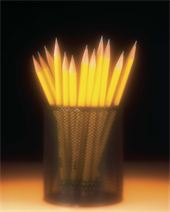
Will underlines with his newly sharpened yellow pencil a
line where he says that his superhero flies off to fight the evil alien mutants,
right before ‘the end.’
“Let’s back up. Is that your main character? A superhero? Not me?”
“I don’t write books about girls.”
“Today you will, or I’m leaving.”
“I guess I could add you but only as a secondary character.”
“Forget it then. This story ends now.”
“No, wait!!! Lara!!! You can be a main character too.”
“A superhero too?”
“Yes, a superhero, too.”
“What’s my name in the story?”
“Can’t you just be Lara?”
“What’s the other superhero’s name?”
“He has a name,” said Will, clutching his pencil even
tighter.
“You didn’t include it.”
“But I know the name.”
“And I only know what you write on the page, Will, and what
I read. So what’s his name? What does he look like? What is he thinking? Seeing? Touching? Feeling? Use all of your senses to describe him—and me.”
Will put his pencil down on the lined notebook paper.
“That’s okay. You are going to have to edit and revise this
story—every writer does that. But hey, tell me, what does this other hero want?
What do I want?”
“I don’t know. I never know what you want, Lara!”
“I want to save the world, of course. Ka—zooom!! Don’t all
heroes want to save the world?”
Will snatches up his pencil and scribbles that down: save
the world. Ka—zooom!!.
“What obstacles do we face? What decisions do we make? All this
tumult is about something called: Plot. We have to have stuff happen to us.
Challenges. What helps us or stops us from doing our job or getting what we
want or, in this story, saving the world? Start at the beginning, again. You
can do this. You can write your own heroes, Will.”
“Can I use exclamation points?”
“Maybe just one or two,” said Lara laughing with Will, and
with that Lara ka-zoomed off the page.
“Wham!” dashed off Will, beginning his story, again....
------------ |
|
|
Posted on Wednesday, August 13, 2014 9:43 AM
"Before My Eyes, by Caroline Bock, takes the reader through the last few days of summer from the perspectives of three narrators: two teens and a mentally-ill young adult. Bock skillfully weaves together the topics of schizophrenia, gun violence, family issues, and typical adolescent angst while at the same time providing a compelling story. Though the reader gets a glimpse of the book’s climax in the first few pages, the end plays out in an unexpected way when unlikely heroes emerge. As a retired Professor of Education, I believe Before My Eyes would be an excellent book for an 11th or 12th-grade English class, and since it provides a realistic portrayal of schizophrenia, it might even be a good choice for an AP Psychology class. Whatever one’s reason for choosing this book, the reader will not be disappointed."—Edmund Sass, Ed.D., Professor Emeritus of Education
This summer, I "met" Dr. Sass through the world of social media. He runs a website, Educational Resources and Lessons Plans, and I emailed him about my new novel, Before My Eyes. He was driving through the small town of Bock, Minnesota, population 106, (a town I someday plan to visit!) when he received my email. And so it goes that we he read my brief note, and he agreed to review a copy of Before My Eyes.
I am amazed how we find ourselves connected to one another—and grateful.
|
|
|
Caroline Bock: Posted on Friday, August 08, 2014 12:19 PM
My brother Mark creates art from heart
pine lumber in his studio in Ballston Spa, New York. The studio was once a barn
that once shoed horses and repaired buggies. There are nicks for blacksmith
tools and for the horseshoes in planks and rafters. He paints his art, some of
it furniture, some of it paintings, the colors of the earth— brushed browns,
and deep reds and yellows, allies of zinnias and
sunflowers. Mark is a gentle giant of a guy with a beard going grey and retro
glasses, reminiscent of the glasses our father wore all his life, and I wonder
if he wears them because they are cool and hip, or because they remind him of
our father, who was neither?
The wind stirs in through the open
windows, and the studio is a mixed scent of green wood and dog or horse and
wildflowers from his plantings out front— and bad eggs, the sulfur from the
springs that feed this upstate New York town. The art is substantial— a fish, three-and-a
-half feet long, a carved rooster, its tail flaring, weighing four or five
times the weight of a living rooster; the smooth flesh-like wood of a horse painting
over four or five hands high. I wait to hear the rooster crow or the horse rear
back or the fish, let’s call it salmon, splash out of its river toward to the
sun, returning to spawn in the riverbed were it was born. The light dapples in and
plays with the art. My
brother and I are only together for a few days until we return to our own,
lonelier lives. On Sunday night, we flick on an old movie in his loft above the
studio. “How Green Was My Valley,” won the Oscar in 1941 famously beating out
“Citizen Kane,” is on Turner Classic Movies. As we watch, we both agree: our
father would have liked this John Ford movie about a Welsh family of coalminers,
a workingman’s tribute— and then there’s the ending. He would have hated the
ending. He liked movies in which the good guys win: the American beat the
Nazis; the average guy overcomes odds to find love and happiness. I don’t want
to ruin it, but the father in the move dies tragically in his son’s arms, close
enough to what happened with Mark and my father that we can’t talk when it’s
over that we sit there on his couch in the dark next to one another, the
silence running through us.
Once,
we spent long summer days at our games: kickball, ring-o-leavio, red light
green light one-two-three, one-two-three. We were four latchkey children without
keys, the house on Daisy Farms Drive left forever unlocked by our father since
it was easier not to dole out a key to each of the four of us kids.
Anyway, we
were always racing inside and outside, shouting for one another—our father booming
at us: What the hell are you doing? Do
you think you live in a barn? Close the door— playing freeze tag or hide
and seek on languid summer nights until it was dark, and we could no longer
hide or seek —Get in the house! You want
to get killed by a car playing in the street at this time of night?
After
another threat or two, we’d come running, shouting too. He’d scuff our heads,
his form of love, which we will never forget. My father never understood how he
got a son, an artist, and a daughter, a writer, but he always had the same
advice for the four of us —the way you
make your bed, is the way you’ll sleep in it—which we didn’t understand until
we did.
Finding Inspiration… Writing
Prompts… -Is there one locale (like my
brother’s studio) in which all your senses feel alive? Write about that place. -Do you have a sibling that
inspires you? Write a short scene you and him or her as an adult… and then another
with you as a child.
IF You Want To Visit...
|
|
|
Posted on Friday, July 18, 2014 1:09 PM
Ten very basic writing tips...for a summer Friday afternoon...
1) Write on a regular schedule.
2) Finish a first draft of what you
write.
3) Re-write.
4) Share it with someone who reads a
lot.
5) Re-write and look at plot closely.
6) Re-write and look at characters
closely.
7) Re-read entire work,try reading
parts out loud. Cats are very good listeners. 8) Finish.Say it's done.It's good
enough. So many really good writers I've met in workshops, in the MFA program,
never trust in themselves to say a work is finished.
9) Send it out into the world— and this is a much larger discussion—— but letting it go is the important part, if you want to be a writer with readers (as opposed, I guess, to a diarist).
10) Breathe. Take a breath. Read, a lot.
Take notes on what you read. Is there a word you discover? Is there a name?
(I'm becoming a big collector of names). Be generous to other writers. Write a
review. Try a different form, for example, write flash fiction if you write
novels. Don't wait too long to return to #1.
Do you have some basic writing tips to share?
Have a great weekend all!
|
|
|
Posted on Thursday, July 03, 2014 5:11 PM
Born on this date, July 3rd 1883,into a
German-speaking Jewish family in Prague, Franz Kafka is arguably one of the greatest German writers of the modern era. The hero of his most famous short story "The Metamorphosis"— Gregor Samsa— wakes up and is a bug, a dung beetle, trapped in his shell and in his bedroom by circumstances beyond him.
If a situation is “Kafkaesque“—— it’s nightmarish—— there is a pervasive menace——sinister, impersonal forces at work,
the feeling of loss of identity, the evocation of guilt and fear, and the sense
of evil that permeates the twisted and often absurd logic of ruling power. In short, a sense of being trapped by
unknown, irrational powers...that’s Kafkaesque. Sound familiar?
Kafka wrote to Max Brod, his friend and editor, in an undated letter:"I
usually solve problems by letting them devour me." I often feel that his writing devours its readers, drawing us into the mind of the grotesque, the twisted, and at the same time, offering us up the humanity of the characters.
Overall, Kafka had a dark view of the world. Acclaimed writer and literary critic Vladimir Nabokov, wrote and lectured extensively about Kafka. He notes on THE METAMORPHOSIS: "Its clarity, its precise
and formal intonation in such striking contrast to the nightmare matter of his
tale. No poetical metaphors ornament his stark black-and-white story. The
limpidity of his style stresses the dark richness of his fantasy. Contrast and
unity, style and matter, manner and plot are most perfectly integrated." There's an amazing youtube video of Nabokov lecturing on Kafka:
https://www.youtube.com/watch?v=l9nRNnTQhFA
Until his death in 1924 at age 40 of TB, Kafka wrote largely in obscurity, and left behind instructions to Brod to destroy his works. Thankfully, Brod didn't follow directions.
So what are you reading for?
|
|
|
|
|